Artificial intelligence assistants have rapidly evolved from experimental tools into essential digital infrastructure. With massive user adoption and growing operational costs, companies behind conversational AI are now exploring sustainable monetization models. Advertising is one of the most discussed and debated options.
This article explains how ads in AI systems like ChatGPT may function, why companies are moving in this direction, the ethical challenges involved, and what users, businesses, and regulators should consider going forward.
Key Numbers Shaping the Discussion
The scale of conversational AI adoption explains why monetization is such a pressing issue.
- ChatGPT-scale platforms serve hundreds of millions of users each week, with estimates ranging between 400 million and 800 million active users globally during 2024 and early 2025.
- ChatGPT-related products reportedly generated around $2.7 billion in revenue in 2024, largely from subscriptions and enterprise use.
- Global digital advertising spend is expected to surpass $700 billion, reinforcing why AI interfaces are attracting interest from advertisers.
For many traditional players, including a Social media marketing company in USA, conversational AI represents a new high-intent channel rather than just another placement option.
How Advertising in AI Assistants typically works
Advertising inside AI assistants differs significantly from banners or social feeds. Instead of competing for attention, ads appear during active conversations where users are already seeking answers.
Common formats include:
- Sponsored responses, clearly labeled and shown only when queries are commercial in nature
- Product or service recommendation cards, often with pricing and comparison details
- Interface-level placements, where ads appear around the response rather than inside it
- Context-aware suggestions, based on the current topic instead of long-term user profiling
This approach resembles how an Online Ads Service Company targets search intent, but the conversational setting raises higher expectations around neutrality and trust.
Why AI Companies are Exploring Advertising
Several structural factors are pushing AI platforms toward ad-based monetization.
First, subscription models alone may not sustain free access for hundreds of millions of users. Second, infrastructure and computing costs continue to rise as models grow more advanced. Third, competition among AI platforms is increasing, making diversified revenue streams essential.
For providers of Ai software development services in USA, this shift highlights how monetization decisions now directly influence system architecture, privacy design, and user experience from the earliest stages.
Core Ethical Concerns Surrounding AI Advertising
Trust and Perceived Manipulation
Users often assume AI responses are impartial. When commercial content blends into answers without clear disclosure, trust can erode quickly.
Privacy and Sensitive Context
AI conversations may involve health, finances, or emotional situations. Using such context for advertising raises serious concerns around consent and data protection.
Bias and Market Distortion
Paid placements risk favoring advertisers with larger budgets, potentially limiting fair visibility for smaller or independent providers.
User Consent and Autonomy
Ethical monetization requires that users understand when they are seeing ads and can easily control or disable them.
Blurred Boundaries Between Advice and Promotion
When factual guidance and sponsored messaging look similar, users may struggle to distinguish objective information from paid influence.
What Research and User Behavior Indicate
User surveys consistently show cautious acceptance of AI-driven advertising. Many users are open to AI-assisted shopping or recommendations, but comfort drops sharply when ads are not clearly labeled.
Trust improves when platforms explain:
- Why a recommendation appears
- Whether it is sponsored
- How personalization works
- How users can opt out
Transparency remains the strongest predictor of user acceptance.
Principles for Ethical AI advertising
Responsible implementation requires clear safeguards. Commonly recommended principles include:
- Clear and consistent labeling of sponsored content
- Restrictions on advertising in sensitive topics such as healthcare or legal advice
- Minimal data use with preference for contextual relevance
- Simple and accessible ad and privacy controls
- No deceptive formatting that mimics neutral responses
- Public transparency reports on ad practices
- Independent ethical oversight
These measures help balance revenue needs with user trust.
Regulatory Outlook
Regulators are increasingly focused on AI transparency, consumer protection, and data privacy. As AI assistants become primary gateways to information, scrutiny around advertising disclosures and data usage is expected to increase.
Future regulations are likely to define how sponsored AI content must be labeled and which data can be used for monetization.
What this means for Advertisers and Brands
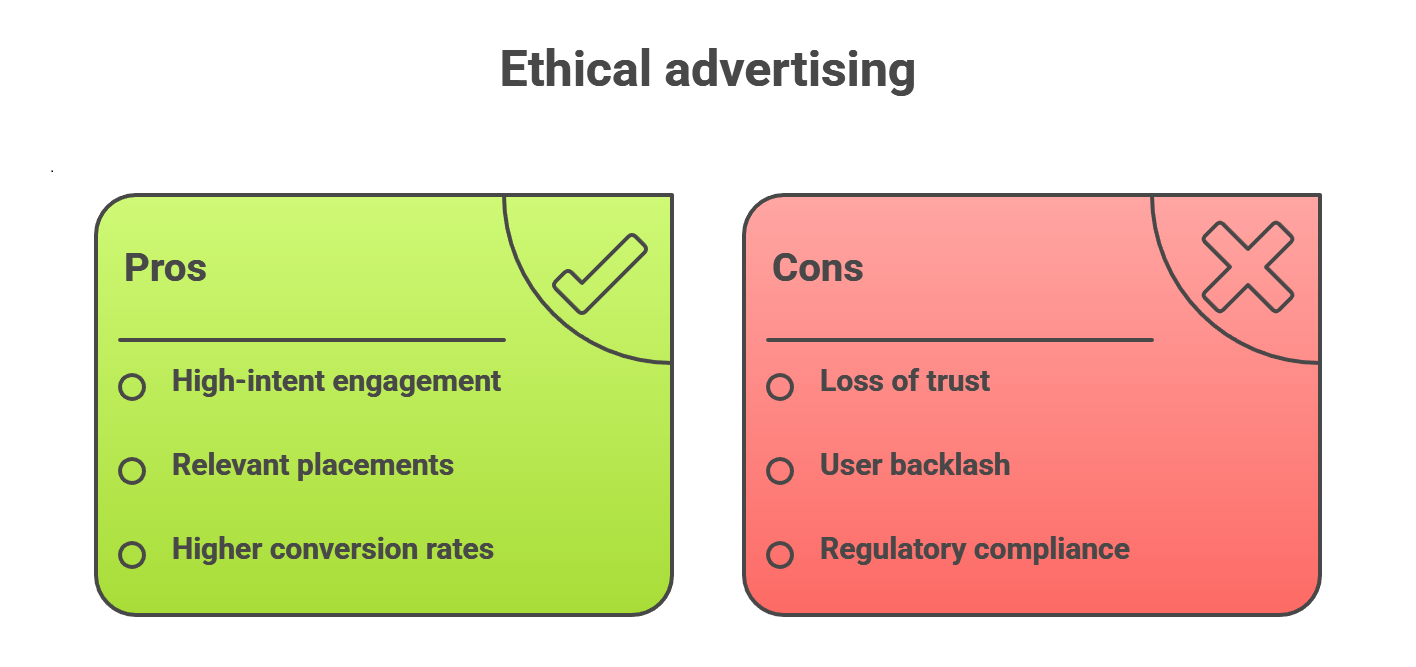
Opportunities
- High-intent engagement
- More relevant placements
- Potentially higher conversion rates
Risks
- Loss of brand trust if ads feel deceptive
- User backlash against intrusive placements
- Increased regulatory compliance requirements
Brands that prioritize clarity and ethical alignment will be better positioned for long-term success.
What users can do
Users can take practical steps to protect themselves:
- Review ad and privacy settings in AI tools
- Opt out of personalization where available
- Treat recommendations as starting points, not final advice
- Provide feedback when ads feel inappropriate
User behavior and feedback directly influence how platforms evolve.
Final thoughts
Advertising and ethics can coexist in AI systems, but only with thoughtful design and strong guardrails. Monetization is necessary to sustain accessible AI, yet conversational assistants carry a higher expectation of trust than traditional platforms.
The future of AI monetization will be defined by transparency, user choice, and respect for context. Companies that prioritize ethical implementation will be best positioned to earn long-term trust in an AI-driven digital economy.